Ingredient profile
Maca Root Extract in Glyco Harmony: What the Label and the Trials Show
Maca root extract is the first name in the Glyco Harmony blend, so by label order it is the heaviest of 22. The label prints no amount for it. A 2010 review found limited evidence for maca in four small trials of 1.5 to 3.5 g a day. The whole blend is 0.2 g. No source links maca to blood sugar.
Written by the Glyco Harmony label deskUpdated
What it is01
What is maca root extract?
Maca root extract is a concentrate made from the root of Lepidium meyenii, a plant grown in Peru. It is sold as a supplement, usually for energy and stamina.
Maca (Lepidium meyenii) Root Extract is the first name in the Glyco Harmony blend. The label does not say what part of the root is used, how strong the extract is, or how much of it a dropper holds.
The profile below lists what the label does and does not print.
| Name on the label | Maca (Lepidium meyenii) Root Extract |
|---|---|
| What it is | Root of a Peruvian plant |
| Place on the panel | Name 1 of 22 inside the blend (heaviest first) |
| Amount per 1 ml serving | Inside the 200 mg blend; listed first, so by label order the largest of the 22 |
| Amount used in research | 1.5 to 3.5 g a day for 2 to 12 weeks in four small trials (2010 review of 131 people) |
| Strength of evidence | Limited: the 2010 review found limited evidence for sexual function; no trial checked side effects |
| Marketed or traditional use | Marketed for energy and stamina |
| Main caution | No trial in the review assessed side effects, so safety is not established. The label gives no amount. |
On the label02
How much maca is in a dropper of Glyco Harmony?
The label does not say. It prints 200 mg for all 22 names together and no amount for maca.
US labels must list the names in a blend in order of weight when no amounts are given (FDA, Supplement Labeling Compliance Guide). Maca is listed first, so it is the heaviest name by label order. The last name, L-carnitine, is the lightest.
How much heavier is unknown. An even split would be about 9.1 mg each. That is our arithmetic, since the label does not say the split is even. Maca could hold more than that, but it cannot exceed 200 mg, the weight of the whole blend.
Even if maca were all 200 mg, it would still be 0.2 g per 1 ml serving. Nothing in the label lets us say it is more than a fraction of that.
The research03
What does research say about maca supplements?
A 2010 systematic review found limited evidence for maca, and only for sexual function. It found four small trials with 131 people in all (Shin 2010, Maca Systematic Review).
The trials gave 1.5 to 3.5 g of maca a day for 2 or 12 weeks. The authors said the number of trials, the sample size and the average quality were too limited for firm conclusions. This is the only maca review we opened, and it is 16 years old.
None of the four trials measured side effects. The review says what is known about maca's risks is not enough.
| 2010 review | Glyco Harmony label | |
|---|---|---|
| Amount of maca | 1,500 to 3,500 mg a day | Not printed |
| Largest it could be | Not applicable | 200 mg, the whole blend |
| Trial dose against that ceiling | 7.5 to 17.5 times larger | Our arithmetic |
| Length | 2 or 12 weeks | Not applicable |
| Side effects measured | In none of the four trials | Not applicable |
Amount vs trial04
Is the maca in Glyco Harmony the amount that was studied?
No source says so, and the numbers point the other way. The lowest trial dose, 1.5 g, is 7.5 times the entire blend.
Compared with an even share of about 9 mg, the trial range is roughly 165 to 385 times larger. The bars show the top possible amount on the label next to the trial dose.
A trial dose says what was tested, not what works for you. The review was also about maca by itself, not a mix of 22 names.
Blood sugar05
Does maca help with blood sugar?
We found no source that says it does. The 2010 review was about sexual function, and it contains no finding on diabetes or blood sugar (Shin 2010, Maca Systematic Review).
The sales page says maca balances hormones. No source we opened says that either. Treat both as claims without support, not as facts about this product.
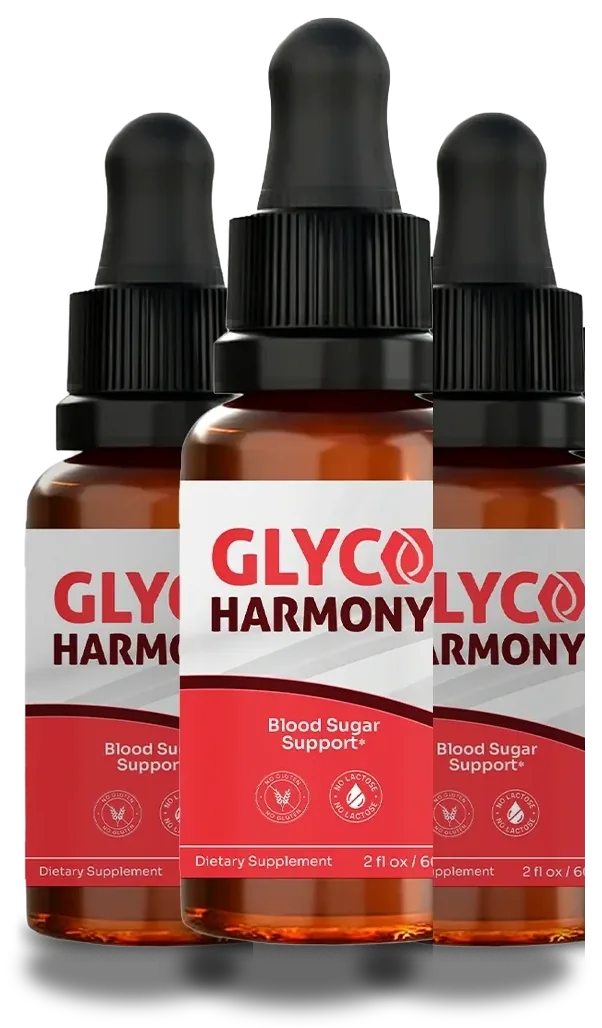
Glyco Harmony is a dietary supplement, not a medicine and not a treatment for diabetes. The front reads "Blood Sugar Support*", a claim the FDA has not evaluated (FDA, Structure/Function Claims). No study has tested the product.
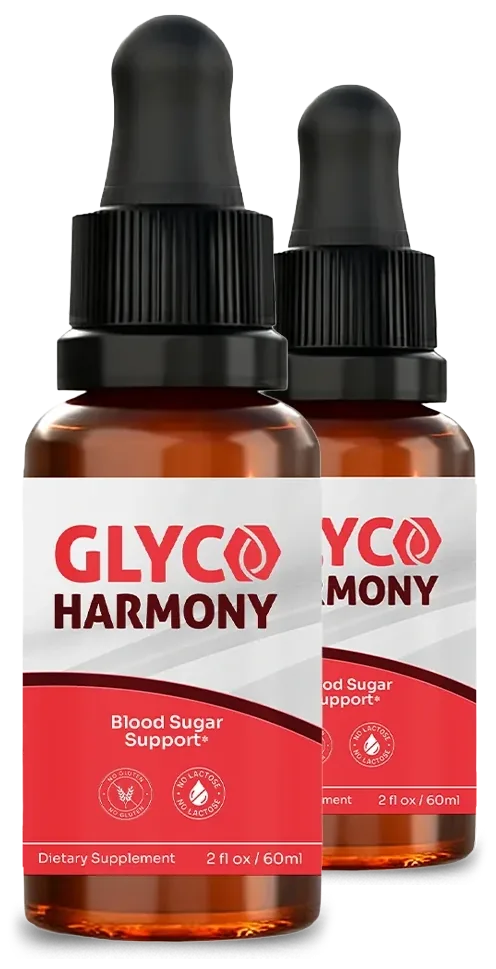
Glyco Harmony: packs of 2, 3 and 6 bottles60 ml dropper bottle · packs of 2, 3 or 6 bottles · price and guarantee terms at checkout
See packsSafety06
Is maca safe? Side effects and medicine cautions
Safety is not established. None of the four trials in the review looked at side effects (Shin 2010, Maca Systematic Review).
We found no source we could open on maca and medicines. That is a gap, not a clean result. We also did not confirm whether the trial maca was an extract or a powder.
Keep taking prescribed medicine. Talk to your doctor or pharmacist before you use Glyco Harmony. Medicines for diabetes can cause low blood sugar, and a supplement that might also lower it adds to the risk (NIDDK, Low Blood Glucose). Maca is one of 22 names, and several others carry medicine cautions.
Shaking, sweating, confusion, fainting, chest pain, or yellow skin or eyes need medical care today. A home meter does not diagnose diabetes (ADA, A1C Test).
Who should ask07
Who should ask a doctor before taking a supplement with maca?
Anyone who takes a prescribed medicine, and anyone the label names. The label says pregnant or nursing mothers, people under 18 and anyone with a known medical condition should consult a physician.
NCCIH's advice is simple. Tell every provider about every product, and ask before surgery (NCCIH, Using Dietary Supplements Wisely).
- You take insulin or another medicine for diabetes
- You take a blood thinner or a blood pressure medicine
- You are pregnant, nursing or under 18
- You have a procedure coming up
The side effects page covers the other 21 names, and proprietary blends explained covers the label format.
More names08
What are the other ingredients in Glyco Harmony?
There are 21 more names in the blend, plus chromium on its own line. The chips below lead to each profile.
Maca has one small review behind it. Compare it with gymnema and African mango.
FAQ09
Maca in Glyco Harmony: your questions
What is maca root extract in a supplement?
It is a concentrate of the root of Lepidium meyenii, a Peruvian plant. Supplement sellers often market it for energy and stamina. A 2010 review found limited evidence only for sexual function, in four small trials (Shin 2010, Maca Systematic Review). It does not describe blood sugar.
Why is maca listed first in the Glyco Harmony ingredients?
US rules require the names in a blend with no listed amounts to appear in order of weight (FDA, Supplement Labeling Compliance Guide). So maca is the heaviest by label order. The label does not say by how much. The whole blend is 200 mg for 22 names.
How much maca is in one Glyco Harmony serving?
The label does not say. A serving of 1 ml holds a 200 mg blend of 22 names, and maca is the largest by label order. An even split would be about 9 mg each, which is our arithmetic. Maca cannot exceed 200 mg.
Is the maca dose in Glyco Harmony like the dose in trials?
Probably not. The 2010 review covered trials of 1.5 to 3.5 g of maca a day (Shin 2010, Maca Systematic Review). That is at least 7.5 times the whole 200 mg blend. No trial tested Glyco Harmony, so no study tells us what its maca does.
Does maca lower blood sugar or help diabetes?
We found no source that says so. The only maca review we opened covered sexual function and says nothing about diabetes (Shin 2010, Maca Systematic Review). Never use a supplement in place of a prescribed medicine, and keep your glucose checks.
Does maca have side effects?
Nobody knows enough. None of the four trials in the review measured adverse effects, and the authors called knowledge of maca's risks insufficient (Shin 2010, Maca Systematic Review). We found no source on maca and medicines. Ask a pharmacist, and stop use and call a doctor if you react.
Is the maca in Glyco Harmony a root powder or an extract?
The label says maca root extract. It does not say what ratio or how strong. It also does not say how much is in a dropper, so you cannot compare it with powder used in trials. Ask the sales desk if you need more detail.
Sources cited above (8)
- A1C. American Diabetes Association, undated.
- Low Blood Glucose (Hypoglycemia). National Institute of Diabetes and Digestive and Kidney Diseases (NIH), 2021.
- Gymnema (Natural Product Monograph). Drugs.com medical review staff (no named reviewer), 2026.
- Maca (L. meyenii) for improving sexual function: a systematic review. Shin BC, Lee MS, Yang EJ, Lee HS, Ernst E; BMC Complementary and Alternative Medicine 10:44, 2010.
- Raspberry Ketone Weight Loss Hype Is Not Substantiated. Roger Clemens, DrPH, Food Technology Magazine (Institute of Food Technologists), 2016.
- Small Entity Compliance Guide: Statement of Identity, Nutrition Labeling and Ingredient Labeling of Dietary Supplements. U.S. Food and Drug Administration (CFSAN), 1999.
- Using Dietary Supplements Wisely. National Center for Complementary and Integrative Health (NIH), 2019.
- Structure/Function Claims. U.S. Food and Drug Administration, 2024.
Who wrote this10
Written and reviewed by
Pages built from the label, the sales page and linked NIH, FDA, CDC, FTC and peer-reviewed sources.
Last updated . Read our editorial standards and how we check reviews. This website is the information site of a USA Authorized Glyco Harmony Retailer. It is not the manufacturer or Instituto Experience, the distributor named on the label. We earn money when you buy through our order links.
Keep reading
More about Glyco Harmony
USA Authorized Glyco Harmony Retailer
Ready to try Glyco Harmony?
Check your medicines first, especially insulin or any diabetes medicine, then pick a pack. The checkout shows the price, the shipping and the money-back terms.
- Secure checkout on the sales site
- Money-back terms shown at checkout
- Ships from the U.S.